Can a Product Be Broad Spectrum and Still Fail the 0.4 mg Cap?
Yes. A product can be marketed as broad spectrum and still exceed a THC limit measured across the entire container. “Broad spectrum” usually describes a formulation intended to retain multiple hemp compounds while removing or reducing THC. It does not, by itself, prove that the finished product meets a legal limit.
That distinction matters as the federal hemp definition shifts toward measuring total THC, including THCA, and as attention turns to a proposed or newly applicable 0.4 mg per-container cap for certain hemp-derived products. A product’s marketing description, its THC result per serving, and its total THC per container answer different questions.
For shoppers and retailers, the practical tools are batch-specific third-party lab testing and a readable certificate of analysis (COA). The COA should make it possible to check the product’s total THC, the reporting limits, and the amount in the whole container—not just the amount in one serving.
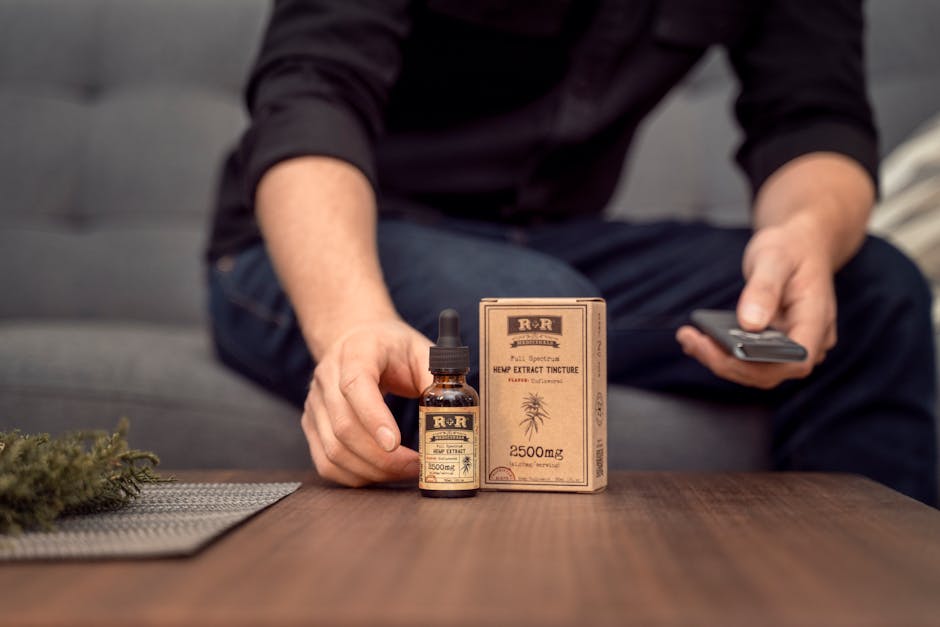
“Broad spectrum” does not mean “under the cap”
Broad spectrum is a product-description term, not a pass/fail result for a particular THC threshold. A brand may use it to indicate that a formula contains several hemp-derived compounds but has had THC removed or reduced. Yet a small amount may remain because of processing, ingredient variability, or trace THC contamination.

Even if a product has a low amount of THC in each serving, the total in the bottle, package, or other defined container may exceed a per-container limit. That is why staff should avoid treating “broad spectrum” as shorthand for “THC-free” or “legally compliant.” Those claims need evidence tied to the specific batch and the rules that apply to the product.
Quick example: serving size versus container size
Suppose a tincture has 30 servings, and a test result indicates 0.02 mg of THC per serving. Multiplying gives 0.6 mg in the bottle:
0.02 mg per serving × 30 servings = 0.6 mg per container
If the applicable cap is 0.4 mg per container, the product would exceed it even though the per-serving amount looks small. The per-container test is stricter because it considers the full amount sold in one package.
Why a per-container cap can be stricter
A per-serving limit and a per-container limit are not interchangeable. A product with many small servings can stay below a per-serving threshold while accumulating a larger amount over the entire package. To assess a per-container cap, calculate the total for the container or use a lab result reported on that basis.
Measure What it tells you Example THC per serving Amount in one labeled serving 0.02 mg × 1 serving = 0.02 mg THC per container Total amount in the complete package 0.02 mg × 30 servings = 0.6 mg Illustrative 0.4 mg cap Maximum amount for the whole container, if that limit applies 0.6 mg is above 0.4 mgPackaging matters, too. A multipack, a bottle, and an individual serving may be treated differently depending on the exact legal language and how “container” is defined. Brands and retailers should not assume that they can choose the most favorable unit of measurement. Check the controlling statute, implementing rules, and any relevant state requirements.
Total THC includes THCA calculations
A key change in the federal hemp framework is the move toward a total-THC approach rather than looking only at delta-9 THC. Under the commonly used calculation, THCA is converted using a factor of 0.877 to account for the mass lost when THCA becomes delta-9 THC through decarboxylation.
Total THC = delta-9 THC + (THCA × 0.877)
Quick math example: THCA can change the result
Imagine a sample reports 0.10 mg of delta-9 THC and 0.40 mg of THCA for the relevant amount of product:
- THCA contribution: 0.40 mg × 0.877 = 0.3508 mg
- Total THC: 0.10 mg + 0.3508 mg = 0.4508 mg
Looking only at delta-9 would show 0.10 mg. Including THCA produces a total of about 0.451 mg—above an illustrative 0.4 mg cap if those figures represent the whole container and the cap applies to that product. Always confirm that the units and sample basis match: a result per gram cannot be compared directly with a whole-container limit without converting it.
This is why a COA that lists delta-9 but omits THCA may not give a complete picture. Ask whether the lab tested for the relevant cannabinoids and whether the reported “total THC” uses the required method and calculation.
What “non-detect” does—and does not—mean
A result marked “ND” or “non-detect” does not necessarily mean that absolutely no THC is present. It means the lab did not detect the compound above the method’s reporting or detection threshold. That threshold varies by laboratory, method, and analyte.
For a very low non-detect threshold, look for the lab’s limit of detection (LOD) and limit of quantitation (LOQ), or equivalent reporting-limit information. A non-detect result from a method that cannot reliably measure down to the applicable threshold may not establish that the product falls below that threshold.
Retailers should be especially careful with “THC-free” language. A claim like that should not rest on a marketing description alone. The most useful support is a current, batch-specific COA showing the relevant THC hemp delta-9 limit explained analytes as non-detect, with reporting limits that make sense for the claim and the applicable rule.
What the 2026 dates mean—and what to verify
Federal changes to the hemp definition are associated with a statutory effective date of November 12, 2026. The shift toward total THC and product-level limits makes it important to review products against the actual federal text, along with any regulations, agency guidance, and state rules in force at the time of sale.
December 11, 2026 should not automatically be treated as a universal second federal deadline or grace period. A later date may appear in a state notice, agency communication, implementation schedule, or industry summary, but its meaning depends on the specific document. Do not assume that every product gets until December 11 to comply—or that the date changes the statute’s effective date—without checking the source.
In practice, treat November 12 and December 11 as dates that require separate verification, not as interchangeable milestones. Before publishing a compliance calendar or advising customers, confirm:
- The enacted federal language and its effective-date provision.
- Whether a later date comes from a separate state rule or agency action.
- Which products and cannabinoids the relevant limit covers.
- How the rule defines “container” and how it requires THC to be calculated.
- Whether any transition period, enforcement policy, or exception is actually written into an authoritative source.
Because rules and implementation details can change, brands should verify the current text before making a date-specific claim. Retail staff can explain what a COA reports without promising that a product is legal everywhere or compliant in every market.
How to review a broad-spectrum product’s COA
A useful COA should correspond to the product and batch being sold. Old reports, reports for a different formulation, or results from a raw ingredient instead of the finished product may not answer whether the retail item meets a cap.
- Match the batch. Check that the lot or batch number on the package matches the COA.
- Check the sample. Confirm the lab tested the finished product, not just an ingredient or an earlier version.
- Review all relevant THC results. Look for delta-9 THC and THCA, plus any other analytes required by the applicable rule.
- Read the units. Identify whether results are shown per gram, per serving, per package, or as a concentration.
- Calculate the package total. Multiply a per-serving result by the number of servings when appropriate, or request a direct per-container figure.
- Check the reporting limits. A non-detect is only as informative as the method’s detection and quantitation limits.
- Confirm the date and lab. A current report from an independent laboratory is more useful than an outdated or unverifiable document.
Companies such as Joy Organics may publish lab information to help customers review product results. As with any brand, shoppers should match the COA to the exact product and batch and read the actual cannabinoid results rather than relying on a broad-spectrum label alone.
Retailer and shopper takeaway
Broad spectrum and below-cap are separate claims. A product may be broad spectrum and still fail a 0.4 mg per-container limit because of residual THC, THCA that contributes to total THC, or the combined amount across multiple servings. The formula delta-9 THC + (THCA × 0.877) can materially change the result, so a delta-9-only review may miss relevant THC.
Use batch-specific third-party lab testing and the COA to assess the actual product. Check the whole-container amount, not just the number per serving, and read the lab’s non-detect threshold before repeating a “THC-free” claim. For the November 12 and December 11, 2026 dates, verify the source and legal effect of each date rather than assuming a general two-step grace period.
Bottom line: “Broad spectrum” describes a formulation; it does not certify a legal outcome. The COA, the total-THC calculation, the container size, and the rule in effect are what determine whether the product meets a specific cap.